
 Questions? Book a meeting


High school exchange program in Costa Rica
Live the life of a Costa Rican teenager during your exchange program in Costa Rica.


An adventure every day
A term, a semester or a school year in Costa Rica
Costa Rica opens the door to a world where lush natural beauty, fascinating traditions and a zest for life reign supreme. During your school year, you’ll improve your Spanish, discover the famous ‘Pura Vida’ way of life and immerse yourself in everyday Costa Rican life.

Costa Rica: as you’ve never seen it before
Pura Vida
‘Pura Vida’ is not just an expression, but a genuine way of life: simple, joyful and respectful of others. You can sense it in people’s smiles, in their relaxed attitude to time and in their love of nature. During your exchange, you’ll be able to discover this way of life for yourself and soak it up a little.
What is secondary school like in Costa Rica?

More than just a school
In Costa Rica, school combines learning with personal development. You attend lessons, but you also take part in sporting, artistic and cultural activities. Cooperation and respect are central to everything, and many projects are linked to nature or community life. This allows you to discover local life as it really is and to experience school in a completely new way.
Uniforms
In most schools in Costa Rica, it is common for pupils to wear a school uniform. This helps to ensure that all pupils are treated equally. You, too, will be proud to wear your school colours every day on your way to class.
Pura Vida
In Costa Rica, great importance is attached to passing on history, culture and values. This helps to foster a strong sense of belonging amongst young people. You, too, will immerse yourself in the heart of this culture, shaped by nature, community life and the ‘Pura Vida’ philosophy.
Diversity of materials
Schools in Costa Rica offer a range of study options, from general programmes to more technical or scientific courses. You can choose your courses based on your interests and future plans, whilst discovering a teaching approach closely linked to practical life and community life.
Experience your adventure in Costa Rica
Choose authenticity: put your trust in WEP and enjoy unforgettable experiences
With the Classic School Programme, you’ll discover the real Costa Rica. You’ll be based in San José and the surrounding area.

Volunteer family (who may receive financial compensation)
Voluntary state school
Accommodation in San José and the surrounding area
A term, a half-year or a school year
Your host family during your school exchange in Costa Rica
Get to know your host family!
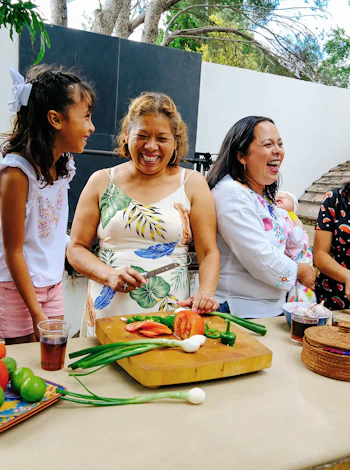
In Costa Rica, hospitality is very important. Host families are often very welcoming and introduce you to their daily lives, traditions and cuisine; you’ll soon feel like a real member of the family.
In Costa Rica, family plays a central role in everyday life. Although households generally consist of parents and children, grandparents, uncles, aunts and cousins remain very close to one another and often join in with meals or celebrations. Get ready to enjoy some warm and friendly moments with your new family.
Your host family will support you throughout your stay. Whether it’s with your homework or choosing your activities, they’ll make sure you settle in well to life in Costa Rica. You can always count on them.

School in Costa Rica
Découvre ce qui t'attend pendant ton programme scolaire
In Costa Rica, the school system is divided into three levels: primary school (Primaria, ages 6 to 12), lower secondary school (Secundaria, ages 12 to 15) and, finally, upper secondary school (Colegio, ages 15 to 18). Spending a year at a secondary school in Costa Rica offers you a unique opportunity to discover a culture deeply imbued with a love of nature and a sense of community. The big advantage is that you can spend your afternoons walking through the rainforest, exploring the beaches or observing the local wildlife!
The school system in Costa Rica
High School, known here as a ‘Colegio’, offers a general education that prepares pupils for higher education. Depending on the school, you can choose from technical, scientific or artistic streams, depending on your interests.
A typical school day starts early, usually around 7.00 am or 7.30 am, and finishes around 2.00 pm or 3.00 pm. This leaves plenty of time to make the most of the afternoon by playing sport, taking part in cultural activities or going on an outing in the countryside.
Structure of the Colegio:
Primer Año de Colegio – Year 10
Segundo Año de Colegio – Year 11
Tercer Año de Colegio – Year 13
High School in Costa Rica
The school year in Costa Rica usually begins in February and ends in November. In between, there are also a few days off to mark the main national and religious holidays.
School calendar
The choice of subjects you study will depend on your chosen stream and your school. During the first two years, you will take the same core subjects as all the other pupils: Spanish, mathematics, natural sciences and other key subjects. In your final year, you will then be able to focus either on physics and the natural sciences (chemistry, physics, biology, etc.) or on the social sciences (economics, philosophy, law, etc.). This will give you the opportunity to concentrate specifically on the subjects that interest you most.
Choice of subjects
Extracurricular activities also play an important role in Costa Rica. Whether at school or outside school, you’ll be able to try your hand at sports such as football, volleyball or surfing, and discover other activities, such as music, dance or creative workshops. There’s a wide variety on offer, so you’re sure to find something to suit you. You’ll often spend the rest of your free time doing your homework, studying or exploring the surrounding countryside.
Extracurricular activities
In Costa Rica, the marking system is similar to, but slightly different from, ours. Marks generally range from 0 to 10, with 10 being the highest mark. Any mark below 7 is considered a fail, and students often have to retake the exam or complete additional assignments to pass the subject. To pass a course, you must therefore achieve at least 7 out of 10.
Marks

Testimonials from exchange students in Costa Rica
Read testimonials from former participants who chose WEP for their study abroad programme
Going with WEP is best
Since 1988, a wide choice of destinations and comprehensive assistance before, during and after your overseas program. WEP is the ideal partner for your big overseas adventure.
Like you, we also get to choose who we travel with: our schools, host families and overseas partner organisations are carefully selected.
We offer a custom-made insurance policy, specifically designed for our participants, and we have a solid network behind us.
Emergency assistance, overseas and from Australia, is available 7 days out of 7, 24 hours a day, 365 days a year.
Allowing all our participants to live their desired overseas experience is a mission, a challenge we're thrilled to accept.
FAQ
Your host family, local coordinator and your host organisation will provide you with support while you are overseas. WEP Australia will remain in contact with the host organisation and your parents to coordinate and support your experience. In case of an emergency, both you and your family will be able to call an emergency phone number that is answered 24/7.
You will be advised of your placement location, host family and host school as soon as feasible. This can range from a few months prior to departure, right up until departure, as a lot needs to happen behind the scenes before each student's placement process is complete and can be communicated to you with certainty. The placement process doesn't only include sourcing a suitable host family, but also finding availability at a local school, and completing all red tape (including, for example, lenghty criminal history checks in some countries). Prior to departure from Australia, all students will receive host family, host school and local coordinator details.
Independent travel is not permissible while on exchange. However, you will be able to travel with your host family, school, host organisation and other community groups such as sporting teams or scouts. Again, the foremost aim of the program is educational, and your priority for any holiday periods must be your host family, who will be investing a lot of time, energy and money into this experience - simply in return for your frienship and positive contribution to their household.
Generally speaking, overseas schools won't issue a diploma to exchange students who are only there for a short time and don't graduate at that school. You may however be provided with a honorary certificate, as well as a WEP certificate of completion, which however don't count towards credit or graduation in Australia.
Language experience is desirable, but not necessary, for most countries. However, some countries have mandatory language requirements. You'll find the specific requirements for each country listed on its page. Intensive language courses may, in some circumstances, meet language pre-requisites. WEP strongly recommends language preparation prior to departure as language knowledge is of enormous benefit in assisting you to quickly adapt to your new family, school and life.
Of course, there are English-speaking destinations available if you are not interested in learning another language.
No, it's the host families who choose the student they wish to invite into their home. Based on the documents you will submit as part of your WEP application, one lucky family will choose to open their home and hearts to you, which is why for all Exchange Classic programs, and many Flex programs as well, there is no avenue for students to choose a specific location.
It may be possible to live with an overseas family that you already know (excluding relatives of the student). However, the family will have to be screened and approved, prepared and supported by our partner organisation in the same manner as any other host family. School enrolment must also be available.

More questions?